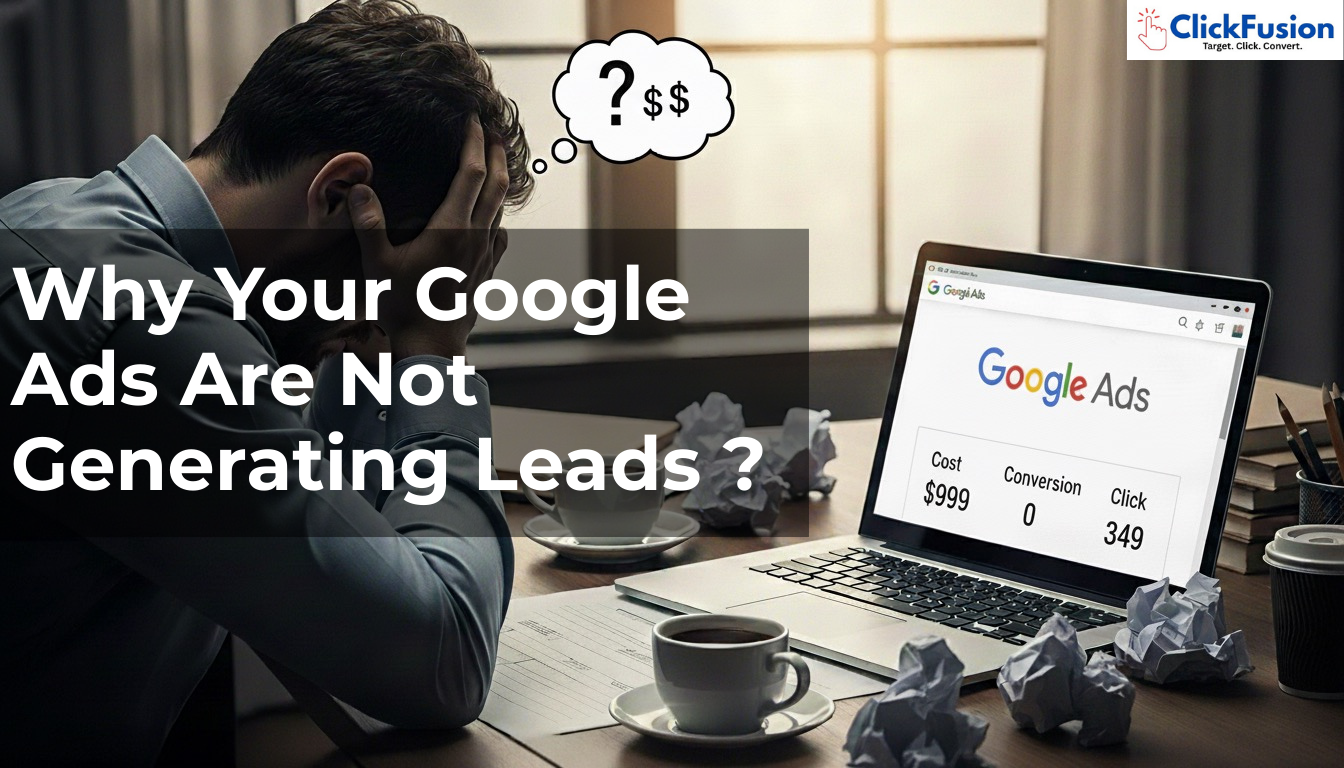
Why Your Google Ads Are Not Generating Leads (Even After Spending Thousands)
Many Auckland businesses come to us with the same frustration.
“We’re spending a lot on Google Ads… but the phone isn’t ringing.”
Meanwhile, a competitor down the road is spending less and still getting more enquiries.
So what’s going wrong?
Google Ads can be one of the most powerful lead-generation tools for a business. But when campaigns are set up incorrectly, it can quickly turn into a very expensive experiment.
The truth is simple: Google Ads is easy to launch, but difficult to master.
Setting up a campaign only takes a few minutes. Getting it to generate consistent leads is a completely different story.
Let’s walk through some of the most common reasons why Google Ads campaigns fail — and what smart businesses do differently.
1. Basic Campaign Setup That Focuses on Clicks, Not Leads
Google makes it very easy to launch ads quickly. In fact, Google will guide you through a “simple setup” process in just a few steps.
But here’s the catch.
Those basic setups are usually designed to generate clicks and impressions, not necessarily qualified leads.
This means your ads may be shown to people who are curious, browsing, or just researching, not necessarily ready to call or submit a form.
- Clicks increase.
- Ad spend increases.
- Leads stay the same.
It’s like inviting everyone to a party when only a few people were actually planning to come.
A proper Google Ads strategy focuses on intent, not just traffic.
2. Choosing the Wrong Campaign Type
Google Ads offers multiple campaign types:
- Search campaigns
- Performance Max campaigns
- Display campaigns
- Video campaigns
- Demand Gen campaigns

Each has its place, but using the wrong one can drain your budget quickly.
For example, many businesses launch Performance Max campaigns without the right audience signals or data. Google then explores broad audiences, which often leads to irrelevant clicks in the early stages.
Search campaigns, on the other hand, usually capture higher intent users actively looking for a service.
Choosing the right campaign type is the first step in building a profitable Google Ads strategy.
3. Your Ads Are Running at the Wrong Time
This is one of the most overlooked issues.
Many campaigns run 24 hours a day, simply because it’s the default setting.
But your ideal customers may not be searching at 3am.
If your daily budget is used overnight or during low-intent hours, your ads might stop showing when real customers are searching later in the day.
Smart advertisers analyse data to identify:
- High-conversion time periods
- Peak enquiry hours
- Low-performance time slots
Then budgets are adjusted accordingly.
Timing matters.
4. Targeting the Wrong Demographics
Not every click is equal.
Depending on your service, certain demographics may convert better than others.
For example:
- Age groups
- Household income segments
- Location targeting
- Device usage patterns
Without analysing this data, ads can easily be shown to audiences who are less likely to convert.
A refined demographic strategy often improves lead quality significantly.

5. The Wrong Keyword Match Types
Sometimes exact match keywords generate far better lead quality, because they target users searching with specific intent.
Regular search term analysis helps identify which keywords actually generate conversions.
Campaigns should evolve constantly based on real performance data.
Sometimes exact match keywords generate far better lead quality, because they target users searching with specific intent.
Regular search term analysis helps identify which keywords actually generate conversions.
Campaigns should evolve constantly based on real performance data.
6. Your Landing Page Doesn’t Match What People Are Searching For
Here’s a simple way to think about it.
Running ads without a relevant landing page is like building a house without a roof.
People arrive, look around, and leave.
If someone searches for a specific service but lands on a generic page, they’re unlikely to convert.
A strong landing page should:
- Match the user’s search intent
- Clearly explain the service
- Highlight benefits quickly
- Provide an easy way to contact you
Some advanced strategies even use dynamic content insertion, where landing page content changes based on the user’s search query.
When the message matches the search, conversion rates improve dramatically.
7. Not Using Ad Assets Properly
Ad assets (formerly extensions) can make a huge difference to performance.
These include:
- Sitelinks
- Callouts
- Structured snippets
- Call buttons
- Location extensions
- Review ratings
Think of your ad like a shop window.
If it only shows a headline and description, it’s pretty basic.
But when you add assets, it suddenly becomes a full storefront, showing offers, credibility, and multiple reasons to click.
Ads with strong assets often achieve higher click-through rates and better visibility.
8. Device Optimisation Is Ignored
Another common issue is ignoring device data.
Some businesses receive most enquiries from mobile users. Others convert better on desktop.
If you’re not analysing device performance regularly, you may be spending budget where conversions are less likely.
Optimising bids and experiences for the right device category can significantly improve campaign performance.
9. Search Terms Are Never Reviewed
This is one of the biggest budget leaks.
Every click in Google Ads comes from a search term, but many businesses never review them.
Over time, ads can trigger for searches that are:
- Informational
- Irrelevant
- Low purchase intent
Regularly reviewing search terms allows you to refine targeting and focus on keywords that actually generate enquiries.
10. Missing or Weak Negative Keyword Lists
Negative keywords are your campaign’s filter system.
Without them, Google may show ads for searches you never intended to target.
For example:
- Job seekers
- DIY queries
- Research-based searches
A strong negative keyword list protects your budget and improves lead quality.
It’s one of the simplest but most powerful optimisation techniques.
11. Generic Ad Copy That Doesn’t Stand Out
Finally, ad copy plays a bigger role than many realise.
If your headline sounds the same as every other ad, users have no reason to choose you.
Your USP (Unique Selling Proposition) should appear in the top headline positions.
This could include:
- A special offer
- Fast response times
- Local expertise
- Unique guarantees
When ads clearly communicate value, they attract better clicks.
The Good News: Most Google Ads Problems Are Fixable
If your Google Ads campaigns are not generating the results you expected, it doesn’t necessarily mean the platform isn’t working.
It usually means the campaigns need proper optimisation, analysis, and strategy.
Small improvements in targeting, keyword selection, landing pages, and ad messaging can dramatically increase lead quality.
For example, in one of our recent campaigns for an Auckland service business, we were able to reduce cost per lead from over $30 to around $8 while generating 80+ enquiries.
(You can read the full Google Ads case study here.)
Need Help Fixing Your Google Ads?
Google Ads can be a powerful growth tool, when it’s managed correctly.
If you feel like your campaigns are spending money but not producing real enquiries, it might be time for a professional review.
At Click Fusion, we help businesses improve campaign performance through smarter targeting, better landing pages, and continuous optimisation.
Learn more about our Google Ads optimisation services and how we help Auckland businesses generate better leads.
Because in Google Ads, success rarely comes from spending more.
It comes from spending smarter.